Censor anything in an image
Draw a box over the sensitive part — a face, a name, an address, a screen — and pixelate, blur or black-bar it. Nothing is uploaded.
💜 Donate $5+ and we'll turn off all ads for a year 💜 Ad-free supporter mode — thank you!
ℹ️ Ads keep Pixelateme free — quick tips to get the most out of the site
Pixelateme has no paywall and no account system. The ads you see are what pay for the servers, so everything stays free with no sign-up. A few tips so they never get in your way:
- A sponsor tab or popup may open the first time you click or tap. Just close it and come back — your image is untouched, since everything happens right in your browser.
- The real controls are the ones in the editor above. Anything labeled “sponsored” is an ad, and no feature here ever requires clicking one.
- On ad pages, stay safe: if one claims “your download is ready”, asks you to install software, or requests personal details — just close it. Your finished image saves directly from this page (nothing is ever uploaded), and we never ask for personal info.
- Prefer no ads at all? Donate $5+ and ads switch off for a full year.
Drop an image or video
or browse files · max 15MB
LIVE PREVIEW
Drop a photo of people
or browse files · stays on your device
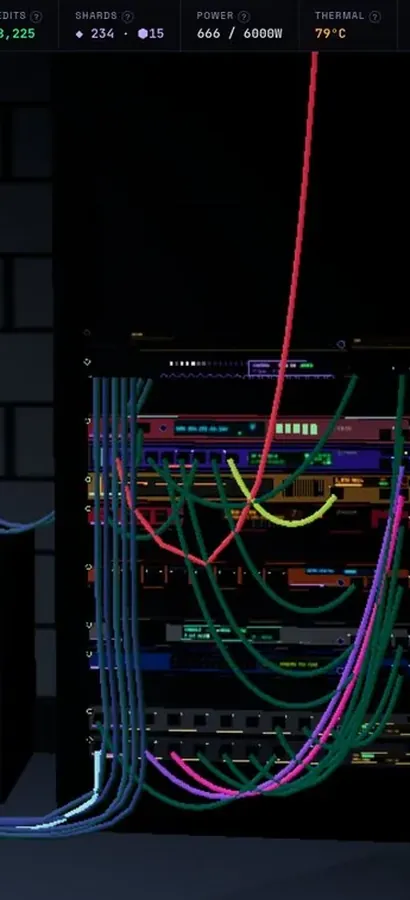
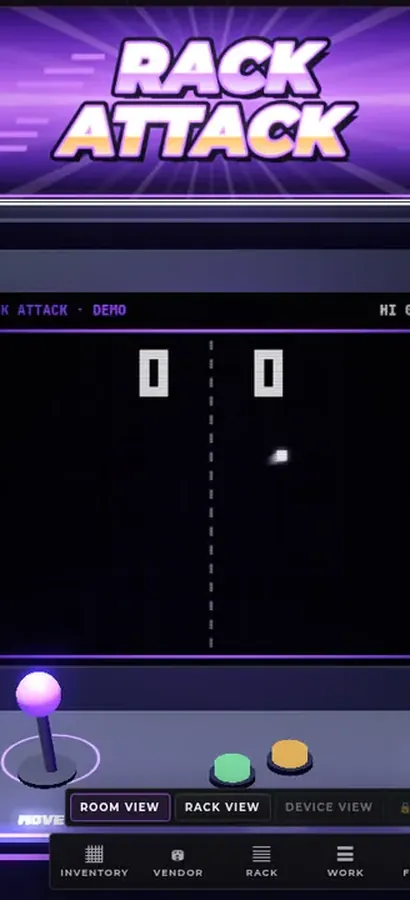
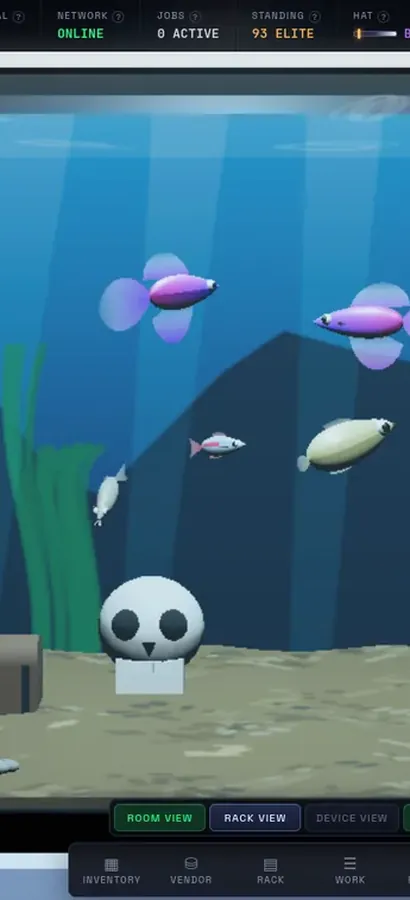
Now in 3D.
Silicon Pirates is a free server-rack simulator you play in your browser, and your lab is a 3D room now. Rack the hardware, run the cables, bring your network online, open every machine at the workbench, mine crypto and keep it all running. Nothing to install.
operator@rack-01:~$ rack status --all ▶ Play Silicon Pirates freeDesktop & mobile · free accountOur own game, not a sponsored ad. What is Silicon Pirates? →
How it works
Upload
Drop in a photo or video — it never leaves your browser.
Pixel Art or Hide Faces
Make retro pixel art, or pixelate faces for privacy.
Tune it
Set pixel size & palette, or auto-detect / draw over faces.
Download
Save your result as PNG (or animated GIF for video).
Why Pixelateme
100% private
Everything runs on your device — no uploads, no accounts.
Hide faces fast
Auto-detect faces or draw boxes to pixelate people & objects.
Retro palettes
Gameboy, NES & CGA looks with optional dithering.
Video → pixel GIF
Turn clips into animated pixel art with adjustable FPS.
Redact images safely — in your browser
Need to share a screenshot with an account number visible, or a photo with a stranger in frame? Draw a box over anything sensitive and Pixelateme censors it with pixelation, blur or a solid bar. Because processing is 100% client-side, the uncensored original never touches a server — the safest possible way to redact an image. Free, no signup, no watermark.
For text, use the black bar — not pixelation
This is the mistake that undoes most redactions. Pixelating a face works because a face has effectively infinite possible appearances. Text does not. An account number is a short string from a known alphabet in a known font, and lightly pixelating it leaves a pattern that can be matched back against candidates. The same goes for names, addresses, licence plates, email addresses and API keys. Choose Black bar from the Style dropdown for those — it deletes the pixels instead of rearranging them, and there is nothing left to reconstruct.
Pixelation and blur are fine for faces, bodies, background scenery and anything else that is not a short string of characters.
Redacting screenshots without leaking the original
A few habits that matter more than the tool you use:
- Export, then share the export. Never send the original file “with a note” about what to ignore.
- Check the edges. Notification banners, browser tabs, taskbar previews and autocomplete dropdowns leak more than the thing you meant to hide.
- Cover it, don’t crop around it in a document editor. A shape drawn over text in a PDF or Office file can be moved aside by whoever opens it — a flattened PNG cannot.
- Remember the file itself. Photos carry EXIF data including GPS coordinates. Censoring the picture does not strip the metadata around it.
Nothing is uploaded
Everything happens in this browser tab using the Canvas API, so the uncensored image is never transmitted or stored anywhere. That matters more here than anywhere else on the site: the whole reason you are redacting is that the original should not be seen. This page is part of Pixelateme — the same tool also auto-detects and pixelates faces and does whole-image pixelation.
Frequently asked questions
How do I censor part of an image?
Upload the image above, drag a box over the part you want gone, and pick Pixelate, Blur or Black bar. Add as many boxes as you need, then download the censored PNG.
Should I pixelate or black-bar sensitive text?
Black bar, always. Text is a short string in a known font, so pixelation can sometimes be worked backwards. A solid bar removes the pixels entirely and leaves nothing to reconstruct.
Is pixelation safe for faces?
Yes, if you go heavy enough. Aim for a face region that ends up no more than about 8–12 blocks across. If you can still see where the eyes are, increase the strength.
Is the original image uploaded?
No. All processing happens locally in your browser — the uncensored original never leaves your device.
Can I censor several areas in one image?
Yes. Draw as many boxes as you need, each with its own style, and use Undo or Clear to fix mistakes.
Does this remove EXIF and location data?
The exported PNG is redrawn from a canvas, so it does not carry the original photo’s EXIF metadata across — but do not rely on that as your only privacy step if location data is the concern.
Is it free?
Yes — completely free, no sign-up, no watermark.
People also ask
Can pixelated text or a licence plate be read back?
Often, yes — which is why it should never be pixelated in the first place. Text is drawn from a small alphabet in a predictable font, so a pixelated block can be compared against every candidate string rendered the same way until one matches. Public tools that do exactly this to screenshots have existed since 2020. Blur has the same weakness. Use Black bar for anything made of characters, and pixelation only for faces, bodies and scenery.
Can a pixelated image be un-pixelated or reversed?
Not in the sense people usually mean. Pixelation throws the original pixels away, so there is nothing left to restore. What the “unpixelate with AI” tools do is generate a plausible-looking face or texture that would pixelate down to the same blocks — an invention, not a recovery. A widely reported 2020 face-upscaling demo made the point badly and publicly when it turned a pixelated photo of a well-known Black politician into a white man. Treat their output as a guess, never as evidence of what was underneath.
So is heavy pixelation actually safe?
For faces and general detail in a photo you are posting publicly, yes — if you go heavy enough that the region is only a handful of blocks across. Two real caveats, though. Researchers have shown that pixelated faces can often be matched back to the right person when the attacker already has a small set of candidate photos — that is re-identification, not reconstruction, but the outcome is the same. And pixelated text is genuinely recoverable: published tools can reconstruct pixelated screenshot text when the font and rendering are known. For names, numbers, addresses and licence plates, use a solid black bar instead.
Is a black bar over the eyes enough to anonymise someone?
No. The classic eye bar is a convention, not a protection — jawline, hairline, ears, build, tattoos, clothing and the setting all identify people, and anyone who already knows the person will recognise them instantly. If the goal is genuine anonymity, hide the whole face rather than a strip of it, and think about the badge, the number plate and the house number in the background too.
Do I have to blur strangers’ faces in photos I post?
It depends where you are and why you are publishing, and this is not legal advice — but the direction of travel is clear. Under the GDPR a recognisable face counts as personal data, so publishing an identifiable stranger without a lawful basis can be a violation, including for photos taken in public. Anonymising the image is the usual answer when consent is not practical. Plenty of places outside the EU have narrower rules, and journalism and personal use are often treated differently. If in doubt, blur them — it costs you nothing and it is what most publishers do.
Do free online pixelate tools upload and keep my photos?
Most of them do — they receive your file, process it on their servers and hand back a link, which means a copy exists on someone else’s machine, usually under terms that let them retain it. That is a poor trade when the reason you are pixelating is that the image shows something private. Pixelateme is built the other way round: the work is done by your own browser with the Canvas API, so nothing is transmitted. If you want to prove it, load this page, switch off your network, and it still works.