Game Boy camera filter
Four shades of green, Floyd–Steinberg dithering and the Camera's own 128-pixel width — already set up. Drop in a photo.
💜 Donate $5+ and we'll turn off all ads for a year 💜 Ad-free supporter mode — thank you!
ℹ️ Ads keep Pixelateme free — quick tips to get the most out of the site
Pixelateme has no paywall and no account system. The ads you see are what pay for the servers, so everything stays free with no sign-up. A few tips so they never get in your way:
- A sponsor tab or popup may open the first time you click or tap. Just close it and come back — your image is untouched, since everything happens right in your browser.
- The real controls are the ones in the editor above. Anything labeled “sponsored” is an ad, and no feature here ever requires clicking one.
- On ad pages, stay safe: if one claims “your download is ready”, asks you to install software, or requests personal details — just close it. Your finished image saves directly from this page (nothing is ever uploaded), and we never ask for personal info.
- Prefer no ads at all? Donate $5+ and ads switch off for a full year.
Drop an image or video
or browse files · max 15MB
LIVE PREVIEW
Drop a photo of people
or browse files · stays on your device
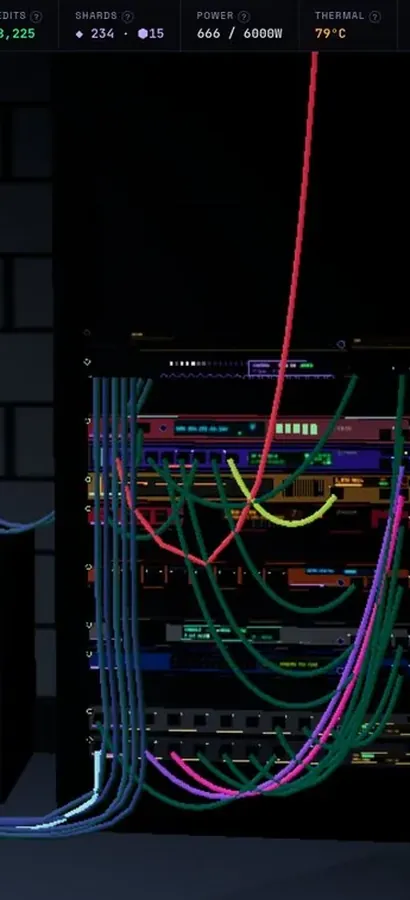
Now in 3D.
Silicon Pirates is a free server-rack simulator you play in your browser, and your lab is a 3D room now. Rack the hardware, run the cables, bring your network online, open every machine at the workbench, mine crypto and keep it all running. Nothing to install.
operator@rack-01:~$ rack status --all ▶ Play Silicon Pirates freeDesktop & mobile · free accountOur own game, not a sponsored ad. What is Silicon Pirates? →
How it works
Upload
Drop in a photo or video — it never leaves your browser.
Pixel Art or Hide Faces
Make retro pixel art, or pixelate faces for privacy.
Tune it
Set pixel size & palette, or auto-detect / draw over faces.
Download
Save your result as PNG (or animated GIF for video).
Why Pixelateme
100% private
Everything runs on your device — no uploads, no accounts.
Hide faces fast
Auto-detect faces or draw boxes to pixelate people & objects.
Retro palettes
Gameboy, NES & CGA looks with optional dithering.
Video → pixel GIF
Turn clips into animated pixel art with adjustable FPS.
The Game Boy Camera look, already dialled in
This page opens with the settings that make a photo look like it came off a 1998 Game Boy Camera: the Game Boy palette (four shades of green), dithering on, and the pixel width at 128, which happens to be exactly how wide a Game Boy Camera picture was (128 × 112). Drop a photo into the box above and you get the result instantly. Download it as a PNG; there's no watermark, no account and no upload, because the whole thing runs in your browser.
Why it looks the way it does
The original Game Boy screen could show four shades. The Camera shot at 128 × 112 and used dithering, a checkerboard-like scatter of dark and light dots, to fake the in-between tones it couldn't display. That pattern is the signature of the look. Pixelateme uses Floyd–Steinberg dithering, which spreads each pixel's rounding error to its neighbours, so skies and faces turn into that grainy, hand-stippled texture instead of flat bands.
A small honesty note: on a real Game Boy the shades were greenish because of the screen. Photos printed on the Game Boy Printer or copied off the cartridge are four shades of grey. This filter uses the classic green screen colours, since that's what most people picture.
Getting a great Game Boy photo
- Pick photos with strong light and dark areas. Four shades can't carry subtle detail; a face lit from one side, a skyline or a pet against a plain wall works much better than a busy group shot.
- Crop tight first. At 128 pixels wide a face needs to fill most of the frame to stay recognisable.
- Try a lower width for a chunkier look. 64 or 96 makes it more abstract; 128 is the authentic Camera resolution.
- Leave dithering on. Turn it off and you get flat poster-like areas instead of the Camera texture. Sometimes that's a nice look too.
- Use the comparison slider under the preview to wipe between the original and the Game Boy version.
Video works too
Drop in a short clip instead of a photo and every frame gets the same treatment, exported as an animated GIF, a little like the Camera's own animation mode. See the pixel art GIF maker for tips. Want other consoles? The 8-bit photo filter has the NES and CGA palettes, and dither an image explains dithering in more depth.
Frequently asked questions
How do I make a photo look like a Game Boy Camera picture?
Upload it above. This page already selects the Game Boy palette, turns dithering on and sets the width to 128 pixels, the Camera’s real resolution. Download the PNG when it looks right.
What resolution was the Game Boy Camera?
128 × 112 pixels in four shades. Set the pixel slider to 128 to match it exactly; lower values give a chunkier, more abstract result.
Why is it green and not grey?
The original Game Boy screen had a green tint, which is the look most people remember. Printed or transferred Game Boy Camera photos are four shades of grey. This filter uses the classic green palette.
Is this Game Boy filter free?
Yes. Free, no signup, no watermark, and nothing is uploaded; the conversion runs in your browser.
Can I use it on my phone?
Yes. It works in any modern browser on iPhone and Android, the same as on desktop.
Can I make a Game Boy style GIF?
Yes. Drop in a short video instead of a photo and it exports an animated GIF with the same palette and dithering.
People also ask
Does pixelating an image reduce its quality or file size?
It destroys detail permanently — that is the point — but the exported file is not necessarily smaller. The pixel dimensions stay the same; only the content becomes blockier. As it happens, large flat areas of a single colour compress very well, so a heavily pixelated PNG often ends up smaller than the original. Keep your untouched original, because you cannot undo it from the export.
My photo went pixelated on its own and I want it fixed — can this help?
No, and it is worth being straight about that: this tool adds pixelation on purpose. If your picture went blocky by itself, the usual causes are a low-resolution original being displayed larger than its real size, a site re-compressing your upload, or generation loss from a file that has been saved and re-uploaded many times. The fix is to go back to the highest-resolution original you have and upload it at the size it will actually be shown — not to run it through an editor.
Do free online pixelate tools upload and keep my photos?
Most of them do — they receive your file, process it on their servers and hand back a link, which means a copy exists on someone else’s machine, usually under terms that let them retain it. That is a poor trade when the reason you are pixelating is that the image shows something private. Pixelateme is built the other way round: the work is done by your own browser with the Canvas API, so nothing is transmitted. If you want to prove it, load this page, switch off your network, and it still works.
Is there a catch — a watermark, a sign-up, or a paid tier?
No. Every feature is free, there is no account, nothing is watermarked, and there is no resolution or export limit beyond the 15 MB input cap. The site is paid for by the ads you see, and a $5 donation turns those off for a year. That is the entire business model.